

Where Doors Tell Stories: Grief, Passage, and the Art of Crossing Over in Portugal
Join Jen as she takes a trip to Portugal and learns a bit about working with grief from the beautiful doors of local towns.

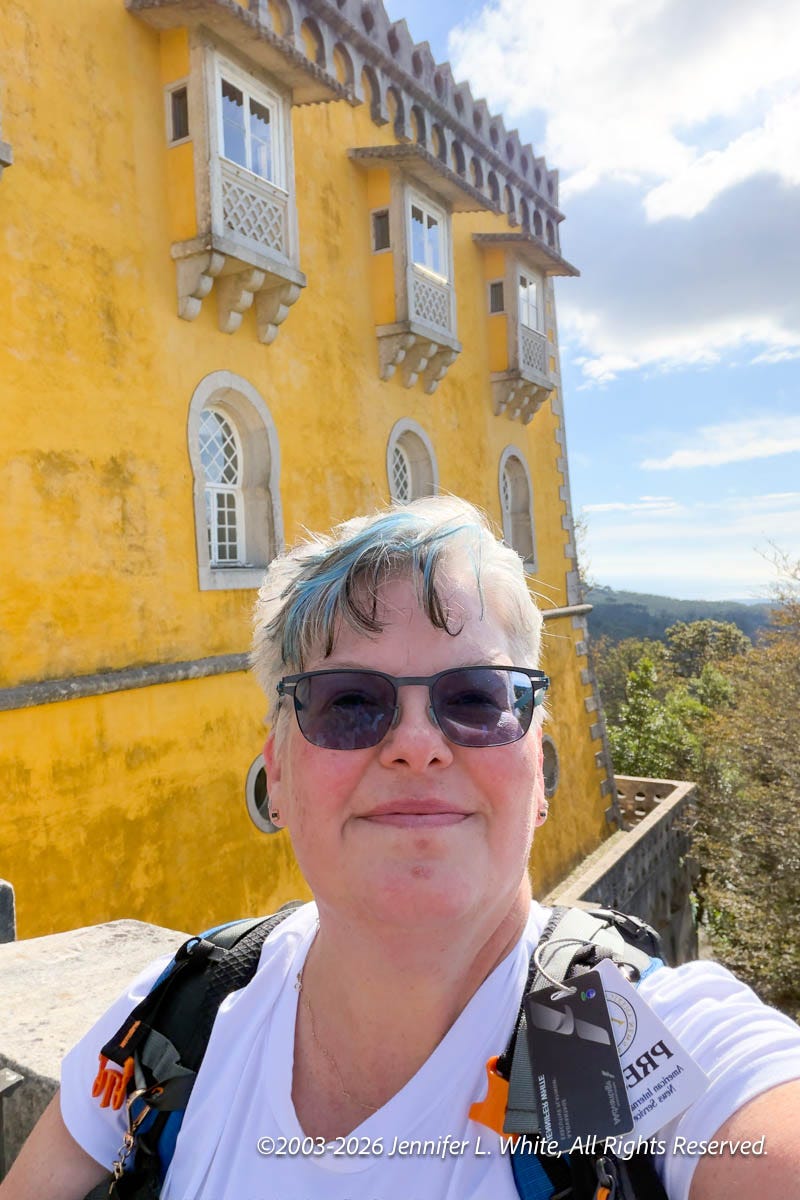
In many towns across Portugal, the doors are not incidental details—they are declarations. They anchor the streets, interrupt the light, and offer a vocabulary of color and craft that speaks as clearly as any guidebook. For me, they became both subject and storyteller: a way into the layered identity of a place where history, artistry, and daily life meet at the threshold.
Travel with me on my solo trip through Portugal in October 2025. A trip that felt important and meaningful as the doors I encountered.
Portugal: A Country Built on Crossings
Portugal has always been a place of thresholds.
Perched on the western edge of Europe, it was both an endpoint and a launch point—especially during the 15th and 16th centuries when Portuguese explorers pushed into the Atlantic and beyond. But long before that, the land itself had already been shaped by multiple civilizations: Romans, Visigoths, and, most influentially, the Moors, who ruled much of the Iberian Peninsula for over 400 years.
That mix shows up everywhere—in arches, in tiles, in geometry, in color. And yes… in the doors.
Medieval Towns: Why the Doors Matter
Many of the towns I waked walking through—especially hill towns like Óbidos and parts of Lisbon—were fortified during the medieval period. Back then, doors weren’t aesthetic choices. They were defense systems.
Thick wood to withstand force
Iron studs to resist break-ins or fire
Narrow openings to control entry
Arched stone frames for structural strength
A door was protection. Survival. Control over who—and what—crossed the threshold. That is why some of the heavier doors I photographed feel almost grounding. They were built with purpose, not decoration.
But here’s where it gets interesting…
Over time, as threats diminished and daily life softened, those same structures began to evolve. The function stayed—but the expression changed. People started painting them. Personalizing them. Claiming them. The doorway shifted from “keep out” to “this is who lives here.”
Color: Not Random—But Not Restrained Either
The bold colors I captured—blues, reds, greens, yellows—aren’t accidental.
Historically:
Blue was often used to deter insects and was associated with protection
Whitewashed walls reflected heat and kept interiors cooler
Bright trims helped define ownership and identity in tightly packed towns
In coastal regions especially, color also reflected proximity to the sea—blues, teals, sun-faded tones. But over time, practicality gave way to personality.
Portugal never fully adopted the “neutral minimalism” that exists elsewhere in Europe. There’s a kind of quiet rebellion in that. A refusal to flatten identity. Portugal’s doors say: we’re not here to blend in.
Azulejos: The Soul of the Walls
Portugal is know for its tiles—they are Portugal’s cultural DNA.
The word azulejo comes from the Arabic “al-zulayj,” meaning “polished stone.” The Moors introduced tilework to the Iberian Peninsula, and the Portuguese took it and ran with it. By the 16th century, azulejos had become a defining art form in Portugal.
Originally:
Geometric, repetitive, Islamic-influenced patterns
No human figures (due to religious restrictions)
Later:
Narrative scenes
Religious imagery
Historical storytelling
Everyday life captured in ceramic
You’ll see entire buildings wrapped in tiles that tell stories—battles, harvests, faith, mythology. Hand-built mosaics around doorways. Trees, animals, abstract scenes. These are modern echoes of an ancient tradition—less formal, more individual.
It’s where history meets the human hand.
The Doors I Encountered and How They Taught Me About Healing from Grief
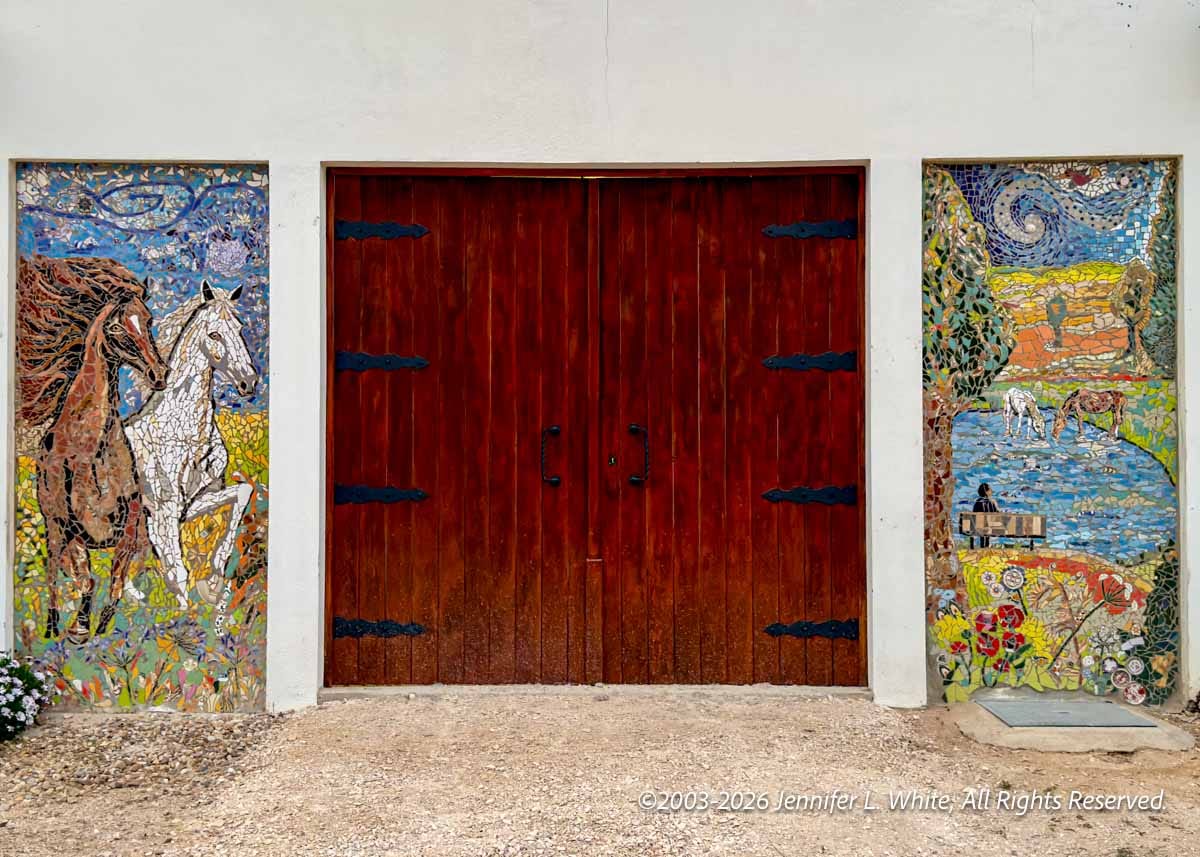
The red door didn’t ask for attention—it took it.
It stood there, grounded and unwavering, as if it had nothing to prove and nowhere else to be. On either side, mosaics pulsed with quiet movement. Horses surged forward in broken lines of tile, their energy caught mid-stride. A countryside unfolded in fragments—sky, field, horizon—pieces that refused to make sense up close, yet somehow resolved when I softened my gaze and stepped back.
Through the lens, it was a study in contradiction: stillness that moved, fracture that formed coherence, chaos that held intention. And something in me recognized it instantly.
Grief has the same architecture.
There are days when everything splinters—memory, identity, the imagined future I once carried so clearly: a life with my husband, my daughter, my son. A life that felt whole because I believed it would continue in a certain direction. Up close, after loss, nothing aligns. It’s jagged. Disorienting. Unrecognizable.
But then—without permission, without warning—there are moments. A breath. A frame. A flicker of light where something holds. Not fixed. Not healed. But held.
Standing in front of that door, camera steady in my hands, I felt something shift—not dramatically, not in a way I could name—but enough.
The door wasn’t trying to hide its fractures. It was built from them. And maybe that’s the truth grief keeps circling back to, whether I am ready or not:
Wholeness is not a return to what was.
It is a quiet, courageous willingness to remain open—to stand in the pieces, to see them, to live with them… and still, somehow, to create something that holds.
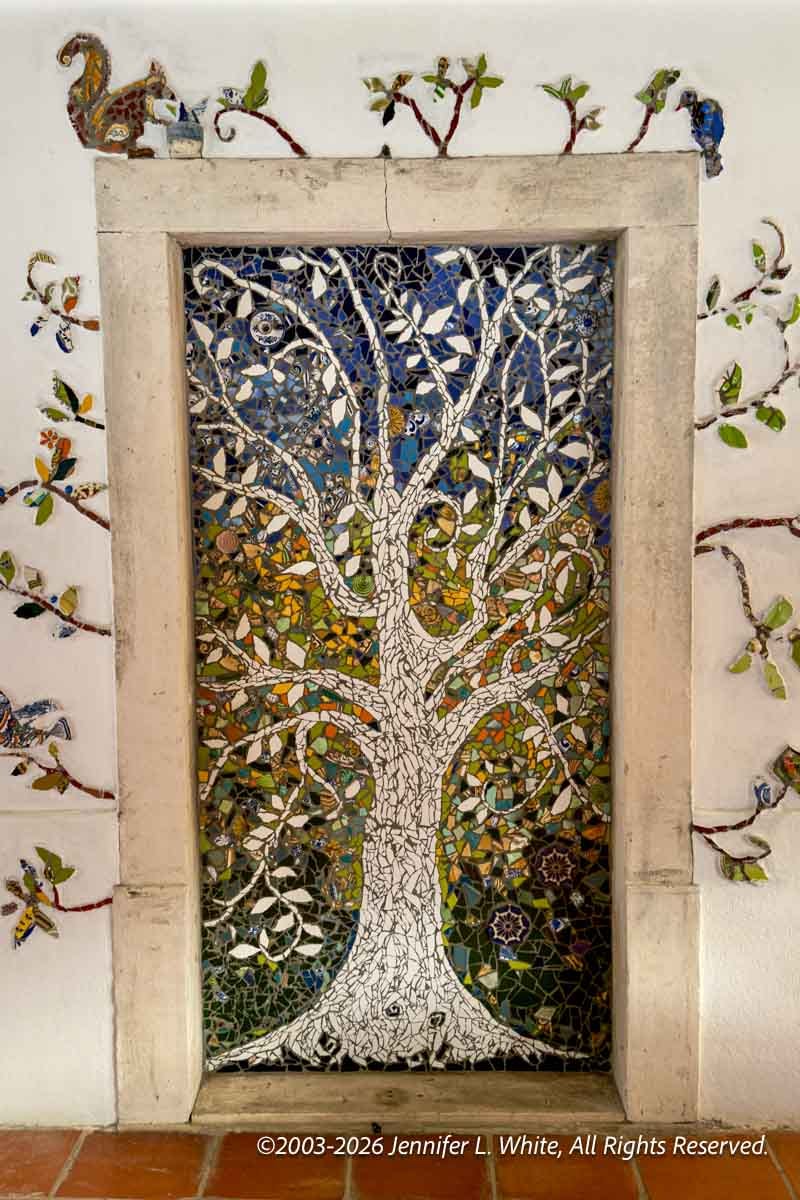
This doorway no longer feels like an entrance—it feels like a beginning.
From the threshold itself, a tree rises. Its trunk is rooted in the place where crossing happens, where one world meets another. Branches stretch outward in arcs that feel both deliberate and wild, holding birds mid-flight, catching fragments of sky, gathering pieces of something that feels ancient… and yet unmistakably new. Every shard, every curve, every line carries the imprint of a hand that chose to keep building.
Through the lens, it doesn’t read as decoration. It reads as becoming. It doesn’t reach for perfection. It doesn’t try to reconstruct what once was. It grows anyway.
Standing there, something inside me tightens—then softens—because grief leaves behind a very specific kind of longing. Not just for the person who is gone, but for the self who existed before the loss. The woman who moved through the world without this weight in her chest. The one who believed, quietly and completely, that certain things were safe… that certain people would always be there.
I will not get her back. No matter how much I ache for it.
But here, in tile and mortar, another truth reveals itself—one that is harder, but somehow more honest. Something else begins. Not in a dramatic moment. Not all at once. But slowly, almost imperceptibly, through small acts of continuing. Through showing up. Through picking up the camera again. Through allowing myself to see what is still here, even when so much is gone.
This tree does not return to a former shape. It extends from where it is. Maybe that is what growth really is—not a return to who we were, but a quiet, defiant continuation into something we never expected to become… and are still, somehow, alive enough to grow into.
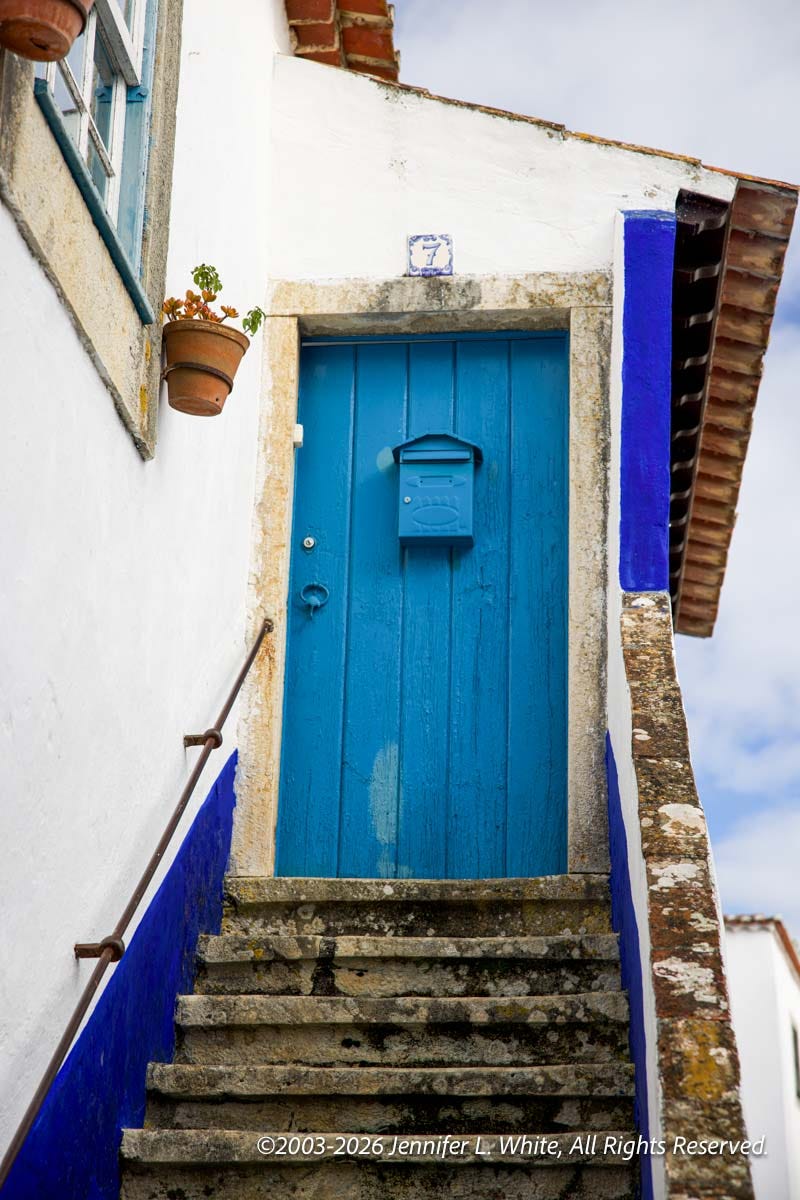
At the top of a narrow rise, this blue door waits. Not inviting. Not resisting. Just there—steady, certain, almost indifferent to whether I reach it or not.
The steps leading up to it are uneven, worn by years of passage. Stone softened by time, shaped by feet that came before me, each one leaving something behind. I lift my camera, then lower it again. This isn’t a moment to capture yet. It’s a moment to move through.
I begin to climb. Not gracefully. Not with confidence. My footing shifts beneath me, and suddenly I am aware of everything—my balance, my breath, the weight I carry in my body. There’s no autopilot here. Every step asks for presence. Every movement requires decision. Something about that feels familiar.
Because this is what moving forward after loss actually looks like—not the bold declarations people expect, not the clean narrative of “healing,” but something far quieter, far less certain. A series of small, uneven steps toward something I cannot fully see. No guarantee. No map. Just the next place to put my foot.
There are moments when I pause, not because I’ve reached a stopping point, but because I’m not sure I can keep going. The past feels closer than the future. The ground behind me feels more stable than what’s ahead.
And still—I climb.
Not because I’m strong every moment. But because something deeper than strength is still alive in me. Something that hasn’t been taken. Something that, even in the wreckage, is willing—quietly, stubbornly—to believe there is something on the other side of this.
When I reach the top, the door doesn’t change. It hasn’t moved. It hasn’t transformed into something grand or revealing. But I have. Sometimes, that’s the only shift that matters.
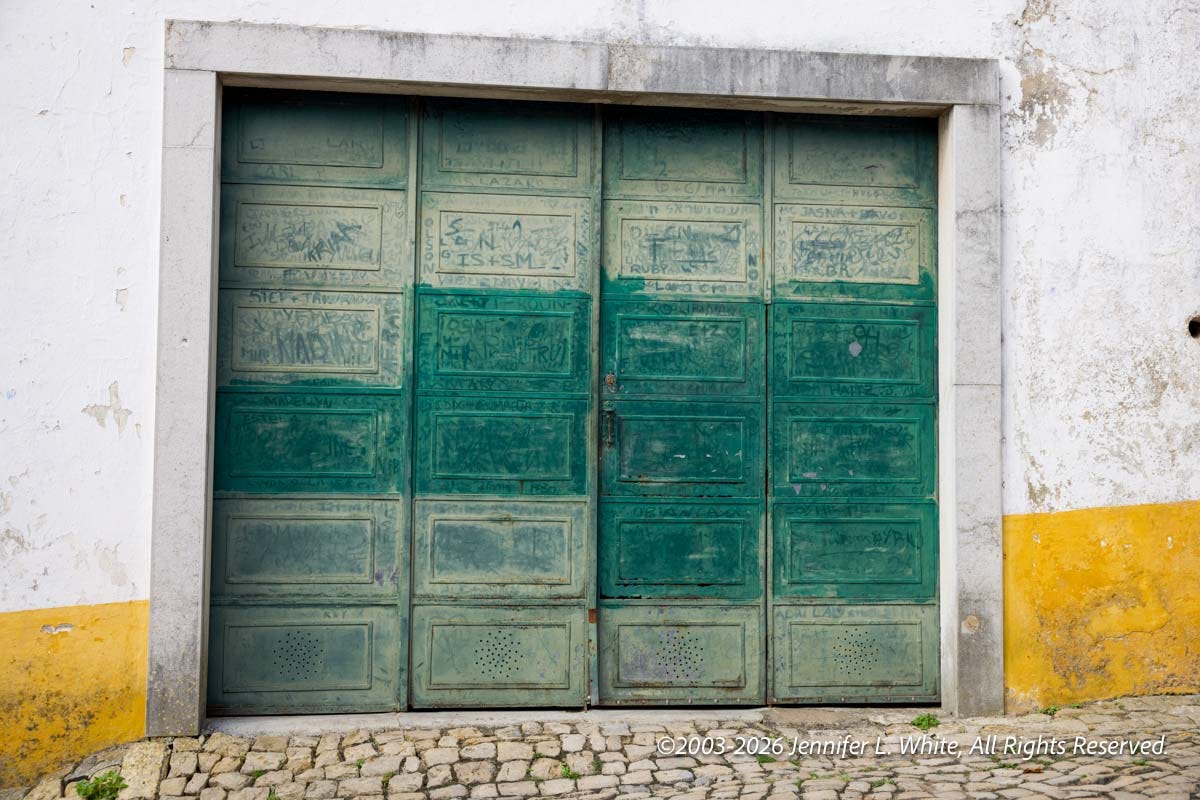
This door is my favorite because it does not try to become anything else.
It stands in its truth—green, but no longer just green. The color has thinned, softened, surrendered in places to what came before it. Layers reveal themselves without apology. Marks remain where hands have pushed, where weather has pressed, where time has insisted on being seen.
Through the lens, it doesn’t read as neglected. It reads as lived. Nothing about it has been rushed into renewal. No sanding down. No clean repaint to make it easier for the eye, more acceptable, more finished. It has been allowed to remain exactly as it is.
There is something disarming in that kind of honesty. Grief does not pass through you without leaving a trace. It settles into the surface of your life. It changes the way you carry yourself, the way you move, the way you see. It alters the texture of everything—subtly at times, undeniably at others.
There is a quiet pressure, almost constant, to make grief look different.
To smooth it over.
To present something composed.
To suggest that you have “moved on.”
Standing in front of this door, that impulse loosens its grip. This—this unedited, unrefined presence—holds more integrity than anything polished.
Healing, real healing, does not ask you to erase what has marked you. It asks you to live with it. To allow the layers to show. To let the story remain visible. Not as something broken. As something that has endured.
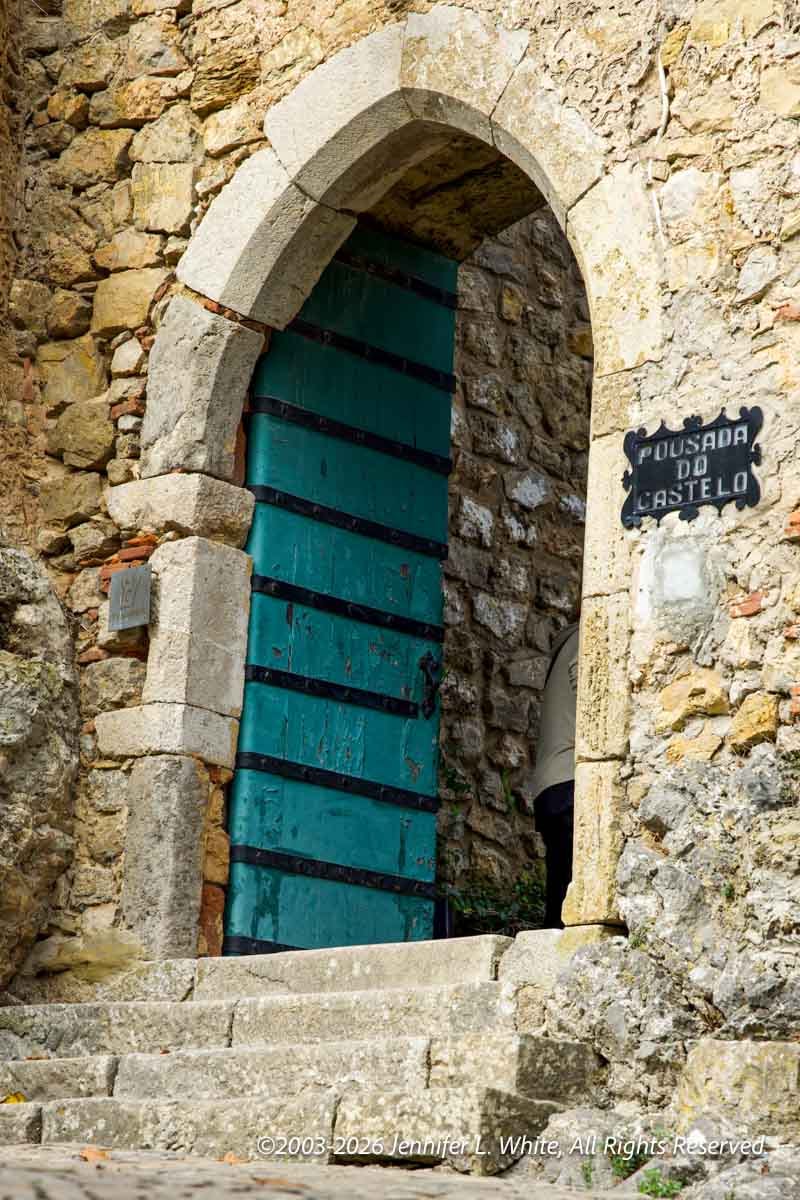
At the top of this little town stood this church and beneath the curve of a stone arch, the teal door rests inside a structure that has outlived certainty itself. The stones are uneven, worn smooth in places where hands have brushed past, where bodies have leaned, where time has pressed in quietly, without asking. There is weight here—not heavy, but steady. A presence that doesn’t demand attention, only acknowledgment.
Through the lens, it feels less like an object and more like a witness.
This doorway has held centuries of crossing. People have stood here carrying everything—joy that could not be contained, fear that could not be named, grief that reshaped them, hope that kept them moving. All of it passing through the same narrow opening. All of it leaving something behind.
The door has opened and closed for lives that never imagined mine. For stories that began and ended long before I arrived, camera in hand, trying to make sense of what I feel and what I see. Yet, here I am.
There is something unexpectedly comforting in that realization. Not because it lessens the weight of my own grief—it doesn’t—but because it places it within a larger current. A continuity of human experience that stretches far beyond this moment, far beyond me. These walls have held loss before. They have held uncertainty, longing, unanswered questions. Still, they stand.
I linger here longer than I planned to. Not to photograph, not at first—but to feel the quiet permission that this space offers. I don’t have to have the answer before I step forward. I don’t have to know what waits on the other side.
Others have stood here, just as unsure. Just as full of what they carry. I am not the first to arrive at a threshold like this—paused, searching, not ready and yet unable to turn back, and I will not be the last. The door doesn’t promise clarity. It offers passage. Sometimes, that is enough.
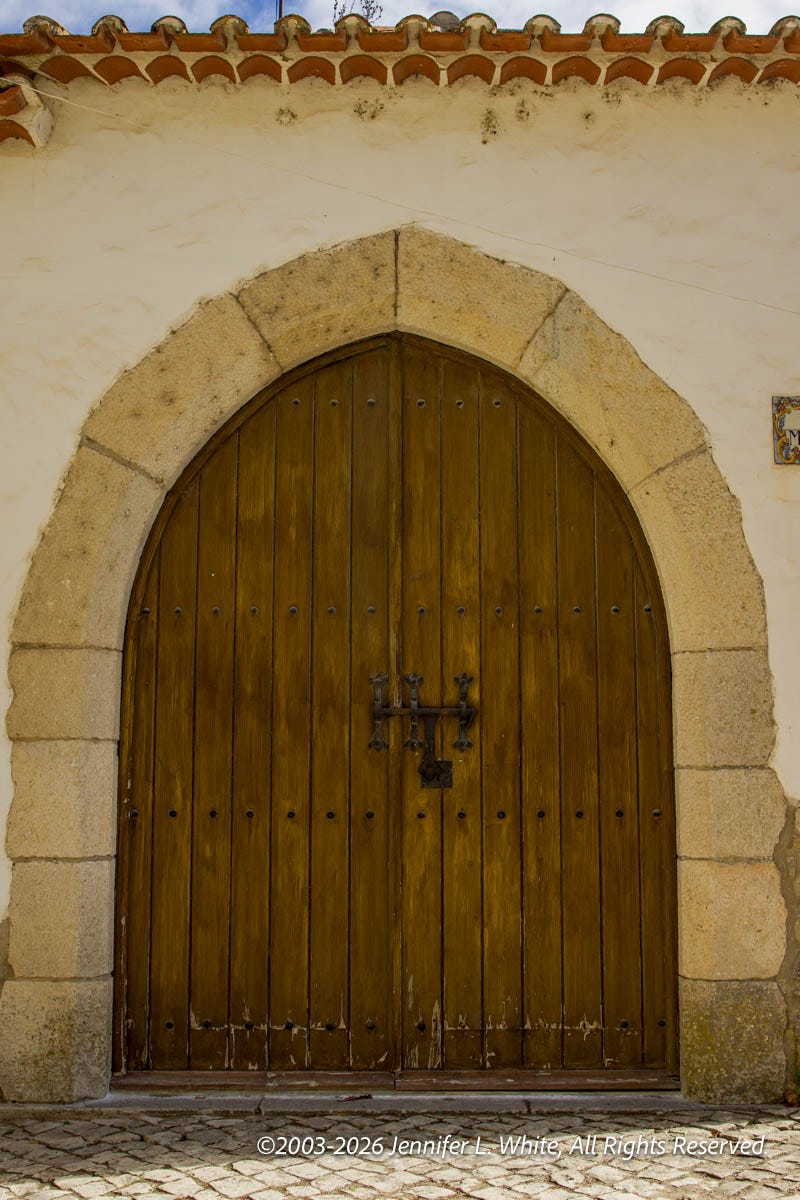
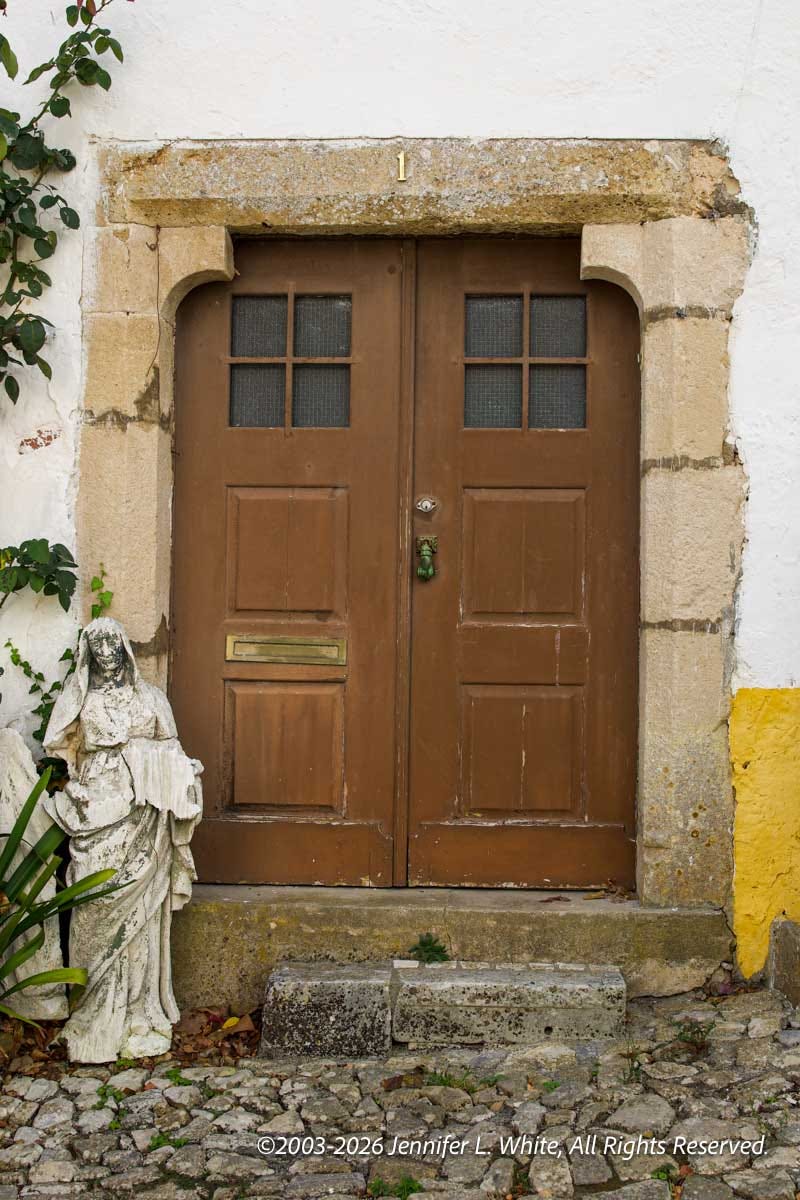
This heavy wooden door does not reach for attention. It doesn’t need color, ornament, or contrast to be seen. It holds. Thick grain, darkened by years of weather and touch, absorbs the light rather than reflecting it. Iron hardware anchors it in place. Every line speaks of weight, of purpose, of something built to endure rather than impress.
Through the lens, it resists interpretation. It simply is.
There are moments in grief where that is the only language that makes sense. Moments when beauty feels out of reach. When inspiration feels like something that belongs to another life. When even the act of looking—really looking—feels like too much. In these moments, I can’t find meaning.
This door does not try to lift the moment. It does not soften it or reshape it into something more palatable. It does not offer transformation, or even comfort in the way we often expect it. It simply stands. Unmoved. Unrushed. Unchanged by the need to be anything other than what it is.
Standing in front of it, something quiet but steady passes between us—not understanding, not resolution, but recognition. I don’t have to be more than I am right now. I don’t have to feel differently. I don’t have to rise above it. I can stand here, as I am, with the weight and the silence.
Sometimes, that is enough-still standing, even when everything inside me feels unsteady.
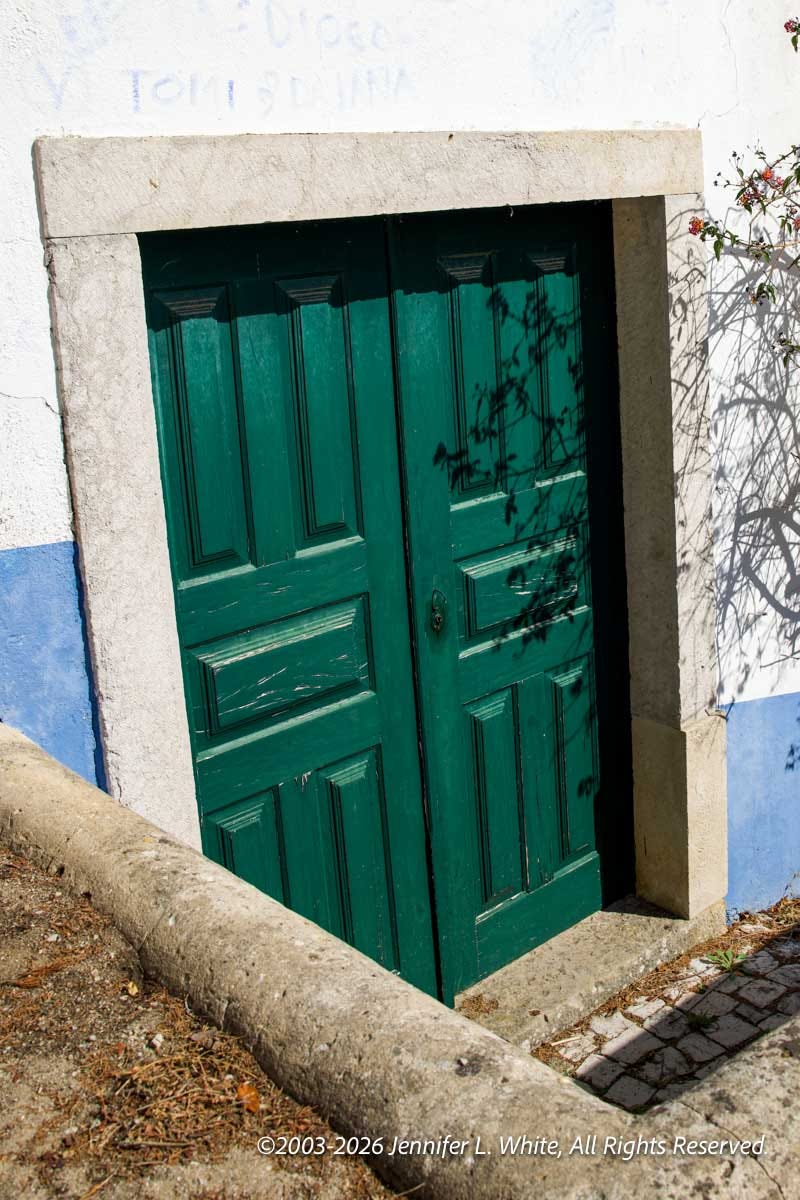
This door doesn’t meet you at eye level. It sits lower—set into the wall as if it belongs to another rhythm, another way of moving through the world. I have to shift my body to see it fully. Step closer. Angle myself differently. Pay attention.
Painted a deep, worn green, it holds the marks of use—scratches, softened edges, the quiet evidence of years lived around it. The white wall frames it simply, the blue trim grounding it in place, while shadows from nearby branches fall across its surface like something fleeting, something passing through. It would be easy to walk right by, and once, maybe, I would have.
But grief changes your line of sight.
It lowers your gaze. It pulls you out of the obvious and into the overlooked. You begin to notice the thresholds that don’t announce themselves—the ones tucked into corners, set just outside the main path, waiting without expectation.
This door doesn’t perform. It doesn’t ask to be photographed. It asks to be seen.
Standing in front of it, camera in my hands, I realize how much has shifted. Not in a dramatic, life-altering way—but in the quiet accumulation of small choices.
The moment I decided to walk a little farther.
The moment I paused instead of passing by.
The moment I lifted the camera again, even when I wasn’t sure what I was looking for.
I am learning that these are the crossings that matter now.
Not the grand, obvious transitions—but the subtle ones. The nearly invisible decisions to keep engaging with the world, even when part of you wants to retreat from it entirely.
Photography becomes something different here.
It is no longer about capturing something extraordinary or creating something polished. It becomes an act of attention. Of presence. Of willingness. A way of standing in front of something quiet, something easily missed, and saying:
I see you.
I am here.
And I am still willing to look.
The red door stands centered, almost unwavering, held in place by the stone walls that frame it with quiet precision. Everything about it feels intentional—the symmetry, the contrast, the restraint. Nothing spills over. Nothing is out of place.
Through the lens, it reads as certainty.
For a moment, I feel the pull of that—something deep and instinctive. The longing for life to return to this kind of order. For things to make sense again. For the edges to be clean, the lines to hold, the future to feel structured and known. It’s a seductive kind of clarity.
But standing there, something softer, more honest begins to surface. The truth is, I cannot return to the life that once felt this balanced. That version of order—the one I held with my husband, my daughter, my son—was not just disrupted. It was undone.
Yet…here I am. Camera in hand. Breath steady enough. Heart still willing. Balance, I realize, is not something waiting for me to find it again, untouched and intact. It is something I am building now. Not in sweeping gestures or perfect alignment, but in small, deliberate choices.
The decision to keep walking.
The willingness to keep seeing.
The courage to remain open, even when the shape of life no longer resembles what it once was.
This door does not carry the illusion of perfection. It carries intention. Maybe that is what balance becomes—not a return to what was, but a quiet, ongoing act of choosing how to hold what is.
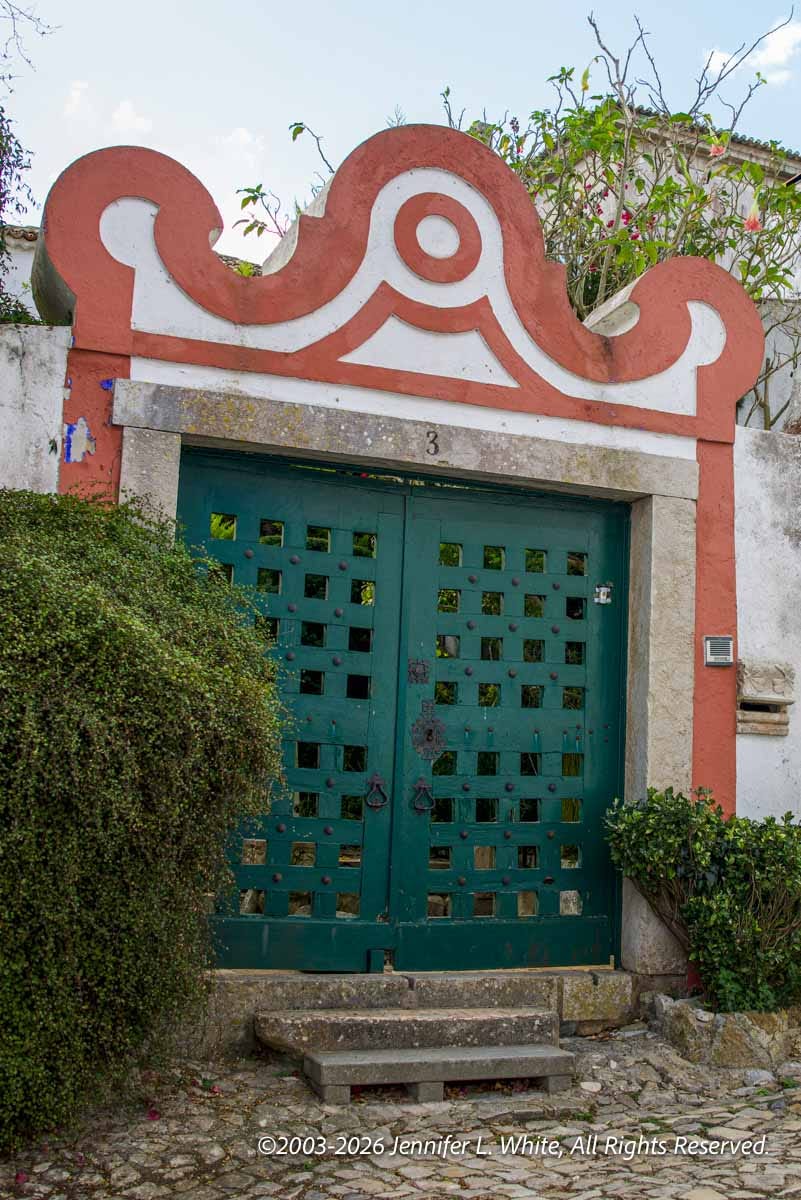
This lattice door doesn’t close itself off—it breathes. Light slips through its openings, breaking into small, shifting patterns. Beyond it, there are only hints—shadows, movement, fragments of something just out of reach. I can’t fully see what’s on the other side.
Through the lens, it resists completion. It refuses to give me the whole story. Standing there, I realize how deeply familiar that feels. This is what the future looks like now.
Not defined. Not mapped. Not something I can plan my way into or understand before I arrive. The life I once imagined—the one that held certainty, continuity, a clear line forward—no longer exists in that form.
What remains is partial light, unfinished views, openings that don’t promise anything…but don’t close, either. There was a time when this kind of uncertainty would have felt unbearable. When not knowing would have been something to fix, to control, to resolve.
Grief changes your relationship with the unknown. It strips away the illusion that anything was ever guaranteed to begin with. In that stripping away, something unexpected begins to form.
Standing here, camera in hand, I feel it—not as a surge, not as confidence, but as a quiet shift. A willingness. Something within me, even after everything, is no longer trying to turn away.
I feel more ready now to step closer. To look through the openings. To accept that I won’t see it all at once. To move forward anyway.
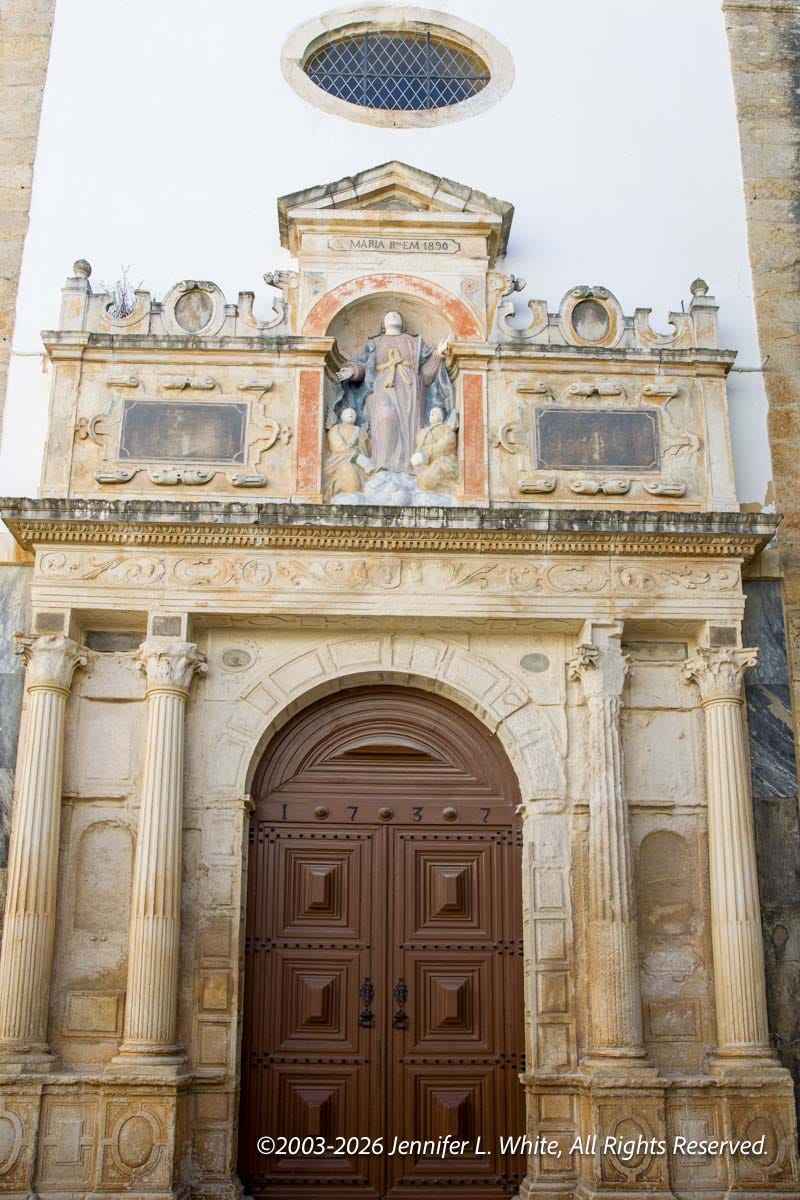
At this church, the doorway no longer feels like architecture. It becomes something you approach with longing. Stone rises around it—carved, weathered, shaped by hands that understood both craft and devotion. Figures stand above, softened by time, their gaze steady, as if they have watched every arrival, every hesitation, every crossing that has happened here long before I ever existed.
I don’t walk straight through. I slow. Something in my body recognizes this kind of space. It asks for a pause, and I listen.
Before I lift my camera, I pause because this isn’t something to capture immediately. It’s something to stand inside of, even if just for a moment.
There are places grief takes you where language doesn’t follow. Where explanation feels too small, too incomplete, too far removed from what you actually carry. You stop trying to name it. You stop trying to make it make sense.
What remains is presence. Just this breath. This moment. This quiet awareness that I am here, and something inside me is still responding to the world. Spaces like this don’t fix anything. They don’t resolve the weight I carry or offer answers where there are none.
They do something subtler. They hold me.
Without asking me to be different.
Without asking me to move faster.
Without asking me to understand.
They simply make room for me to stand exactly where I am.
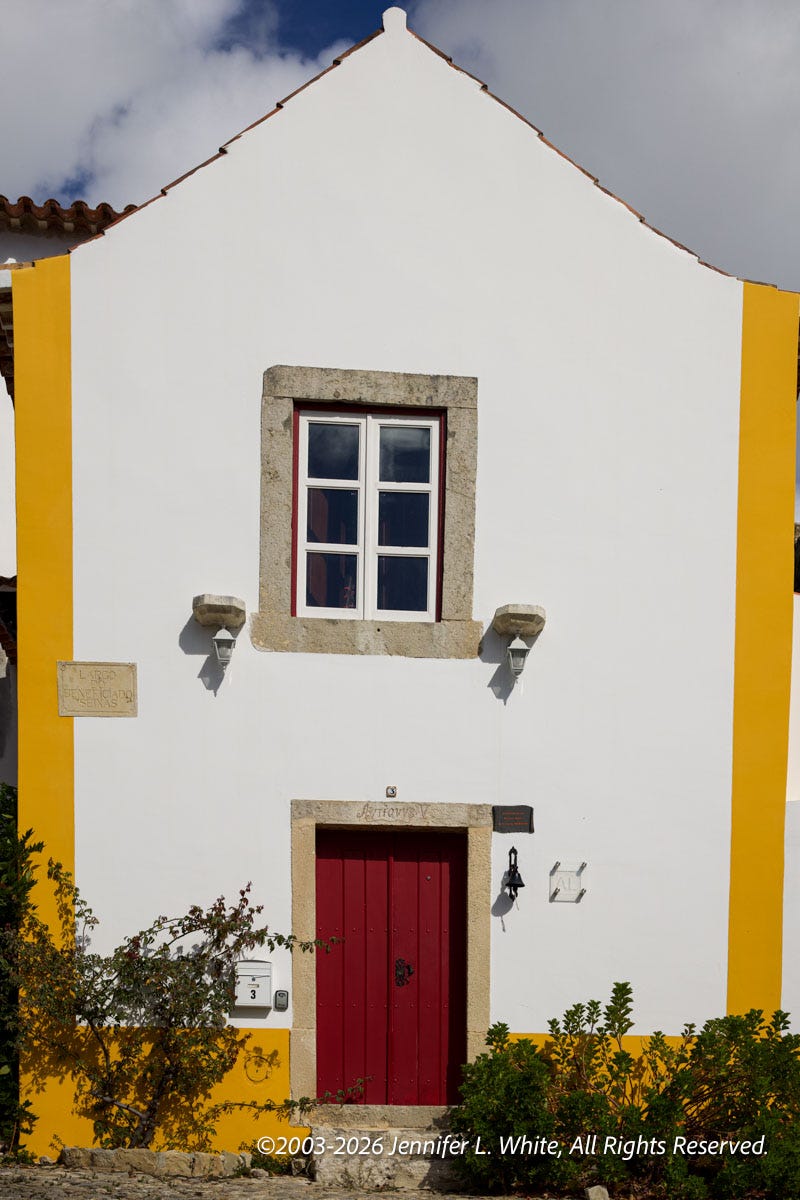
The house stands almost impossibly still.
Whitewashed, precise, held between bold strokes of yellow that rise like pillars on either side, it feels composed—intentional in a way that leaves no room for excess. And there, centered below it all, the red door anchors the structure, quiet but undeniable. Above it, a single window reflects the sky, holding a fragment of something passing through.
At first glance, it reads as simplicity. Flat. Clean. Resolved. As I stand there longer, something begins to shift.
The light moves—just enough to catch the edges of the stone frame, to pull forward the subtle texture in the wall, to reveal the softness in what once felt sharp. Shadows settle into places I hadn’t noticed at first, creating depth where I initially saw none.
What looked static begins to breathe. I realize how quickly the eye decides it understands something… how easily it moves on once it thinks it has seen enough.
Perspective interrupts that. It asks me to stay. To look again. To question what I thought was complete. Returning to photography feels like stepping back into that practice—not of capturing, but of re-seeing.
The camera doesn’t just record what is in front of me. It reveals where I am standing. What I am willing to notice. What I am ready to see.
Grief changes that position entirely. It shifts the vantage point. It alters the way light lands, the way shadows form, the way meaning gathers. What once felt clear becomes layered. What once felt flat begins to hold depth.
Slowly, almost imperceptibly, something begins to open again—not in the world, but in the way I meet it. Photography becomes less about creating something new and more about allowing something to emerge.
A quiet retraining of the eye. A deeper retraining of the heart.
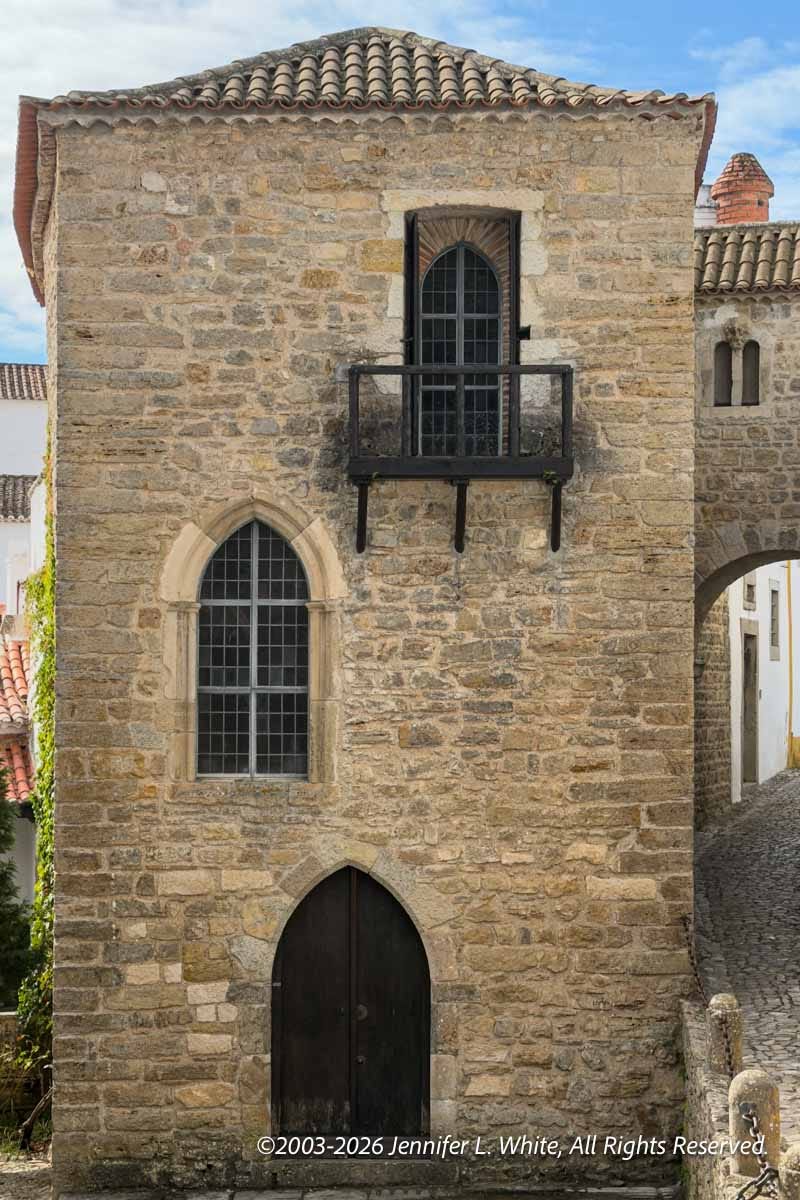
And finally, there is a doorway that does not try to be seen.
Set into rough stone, its dark wooden arch nearly dissolves into the wall that holds it. The building rises with quiet authority—centuries old, weathered, steady—and the door sits within it as if it has always belonged there, asking nothing, offering no performance. It would be easy to miss.
No color pulls you in. No ornament demands my attention. Even the light seems to pass over it gently, as if honoring its restraint. Above, windows hold their own quiet geometry, a small balcony reaching outward, but the door remains grounded—rooted, almost hidden in plain sight.
Through the lens, it doesn’t compete. It simply exists. There is something deeply honest in that.
In the end, healing does not arrive as a single, defining moment. It does not announce itself with clarity or resolution. It does not transform everything all at once. It happens here.
In the quiet thresholds.
In the places that do not call attention to themselves.
In the nearly invisible crossings where something inside you shifts—just enough.
These are the doorways that matter. Not the grand entrances, but the subtle ones. The ones we pass through without ceremony, without certainty—only to realize later that something has changed.
Portugal: The Healing Journey
Walking the streets in Portugal, camera in hand, was never just about photographing doors. It was about returning. Not to who I was before—because that life, that version of me, no longer exists in the same way, but to something deeper.
Something quieter.
Something more honest.
Something that does not need to be seen to be real.
Somewhere between one doorway and the next, without intention, without announcement, the searching began to soften. The sharp edges of longing began to shift. The weight didn’t disappear—but it began to settle differently within me.
Almost without realizing it, I found myself doing something I once wasn’t sure I could do again.
I step forward through the doorway.